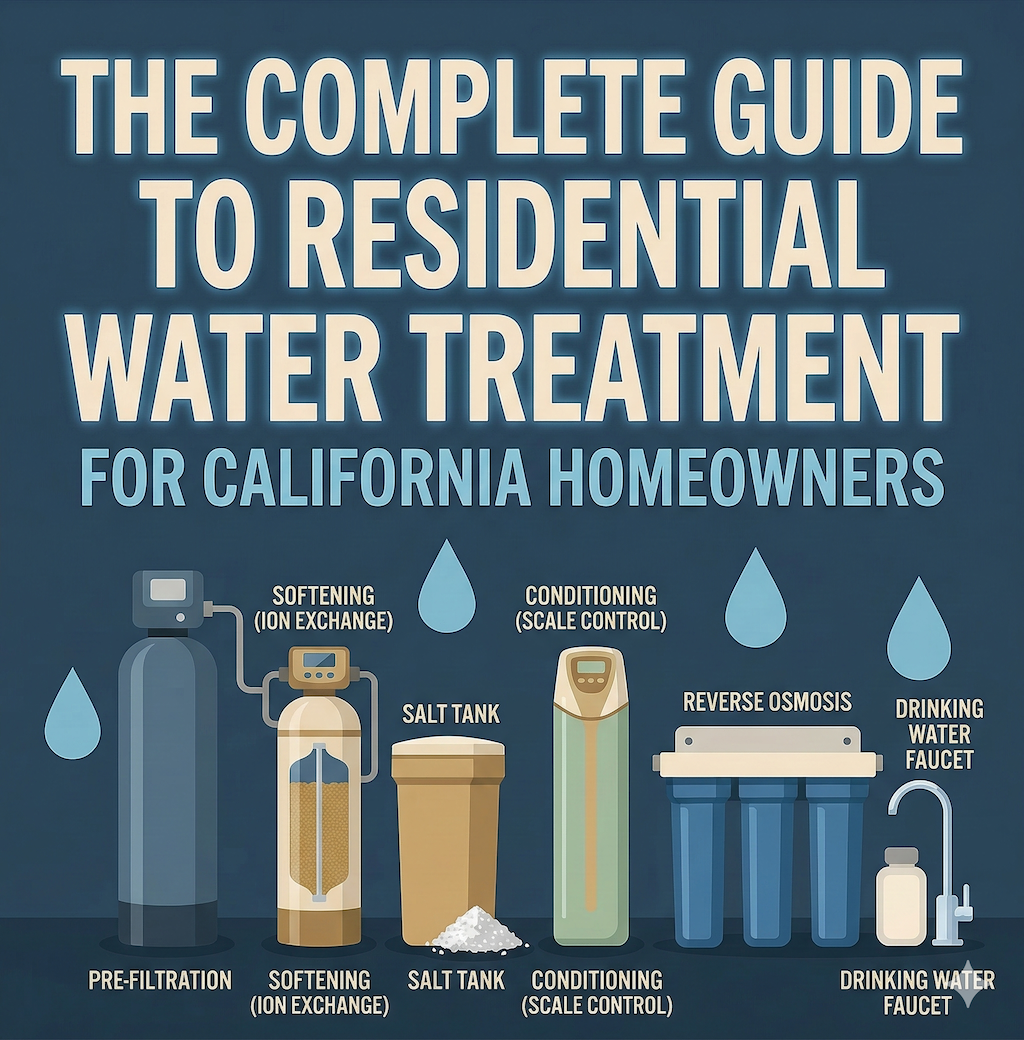
If you live in California, you already know water quality is a major concern. From hard water that destroys appliances to tap water laced with chlorine, fluoride, and agricultural runoff, the water coming out of your faucet may not be as clean as you think.
In fact, the Environmental Working Group (EWG) found that California tap water contains dozens of contaminants above health guidelines — including arsenic, lead, and disinfection byproducts. For families with young children, elderly relatives, or anyone with a compromised immune system, this is a serious issue.
The good news? Residential water treatment systems have never been more effective or more accessible. This guide breaks down everything you need to know to make the right choice for your home.
Before choosing a water treatment system, it helps to understand what you're dealing with. California tap water commonly contains:
The only way to know exactly what's in your water is to get a free professional water test — which is the smartest first step any homeowner can take.
A whole-house filtration system (also called a point-of-entry system) treats all the water entering your home — every faucet, shower, dishwasher, and washing machine gets filtered water.
Best for: Removing sediment, chlorine, chloramines, and general contaminants from all water in the home.
Benefits:
California has some of the hardest water in the country. A water softener uses an ion-exchange process to remove calcium and magnesium ions, replacing them with sodium — effectively eliminating hardness.
Best for: Homes with hard water causing scale buildup, soap scum, dry skin, and appliance damage.
Benefits:
Many California homeowners pair a water softener with a whole-house filter for comprehensive protection.
Reverse osmosis is the gold standard for drinking water purification. RO systems push water through a semi-permeable membrane that removes up to 99% of dissolved contaminants, including lead, arsenic, nitrates, fluoride, and PFAS.
Best for: Purifying drinking and cooking water at the kitchen sink.
Benefits:
A typical under-sink RO system produces 50–100 gallons of purified water per day — more than enough for a family's drinking and cooking needs.
Ultraviolet purification uses UV light to neutralize bacteria, viruses, and other microorganisms. It's chemical-free and leaves no taste or odor.
Best for: Homes on well water or in areas with biological contamination concerns.
Benefits:
The right system depends on your specific water quality issues, your home's size, and your budget. Here's a simple framework:
Many homeowners put off water treatment because of upfront costs — but untreated hard water and contaminants are expensive in the long run:
A quality residential water treatment system typically pays for itself within 2–3 years through energy savings, appliance longevity, and reduced bottled water spending.
California homeowners face some unique water quality challenges worth knowing about:
These issues make professional water treatment not just a comfort upgrade — but a genuine health decision for California families.
The single best thing you can do today is find out exactly what's in your water. A professional water test takes the guesswork out of choosing the right treatment system and gives you a clear picture of your family's exposure.
At Select Source Water, we offer free in-home water tests across California — with no pressure and no obligation. Our certified water specialists will test your water on the spot, walk you through the results, and recommend solutions tailored to your home.
Ready to find out what's in your water? Schedule your free water test today and take the first step toward cleaner, healthier water for your family.

