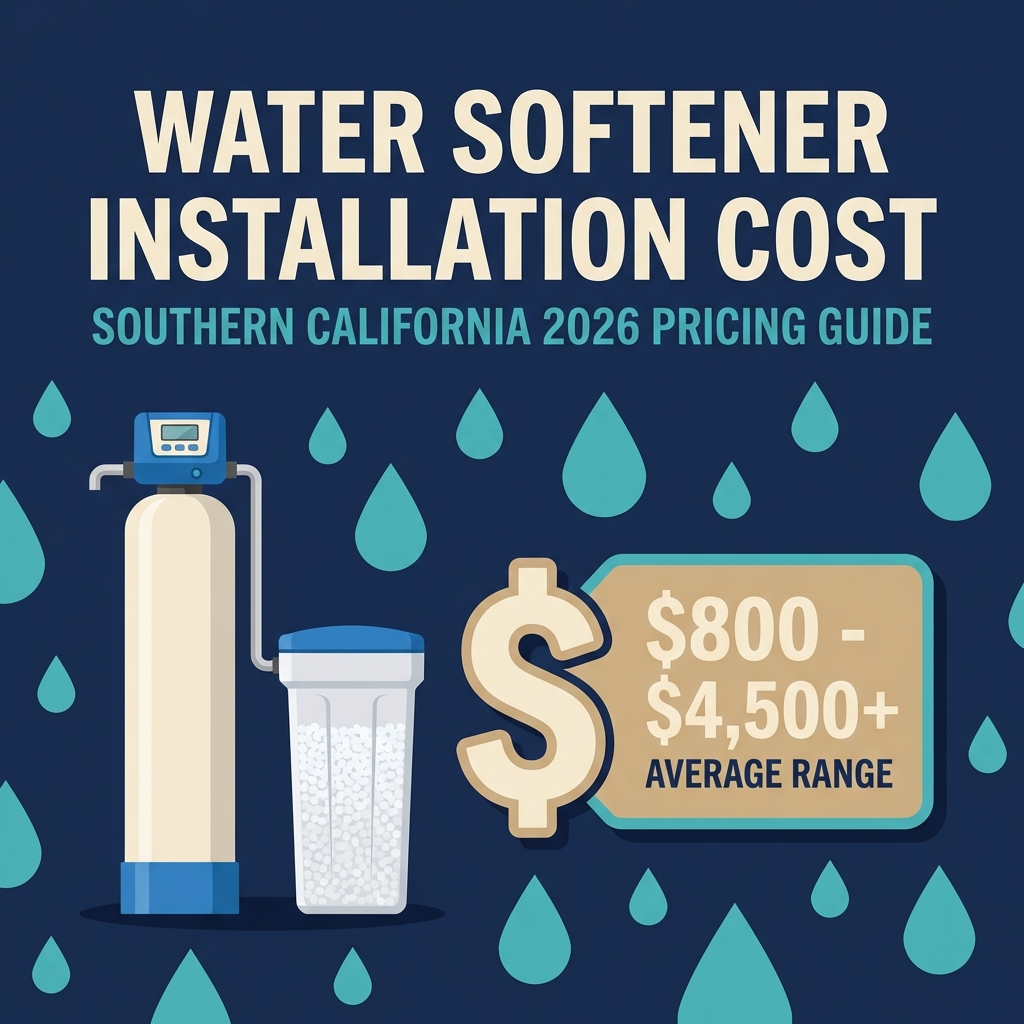
If you live in Southern California, you already know the signs: chalky residue on your faucets, soap that won't lather, dry skin after a shower, and a dishwasher that leaves cloudy spots on every glass. The culprit is hard water — and it's one of the most widespread household problems across LA, Orange County, San Diego, Riverside, and the Inland Empire.
So what does it actually cost to fix it? Water softener installation in Southern California typically runs between $7,000 and $10,000 for most homes, depending on the system type, home size, and your specific water conditions. But with the right financing, you can get started for $0 down and pay as little as $75 per month.
This guide breaks down everything you need to know about pricing, what factors move the needle, and how to make a smart decision for your home.
Quick answer: Most Southern California homeowners pay between $7,500 and $9,500 for a professionally installed whole-home water softener system. Financing options are widely available — including $0 down programs.
Prices vary based on system capacity and type, but here is a reliable baseline for SoCal homeowners:
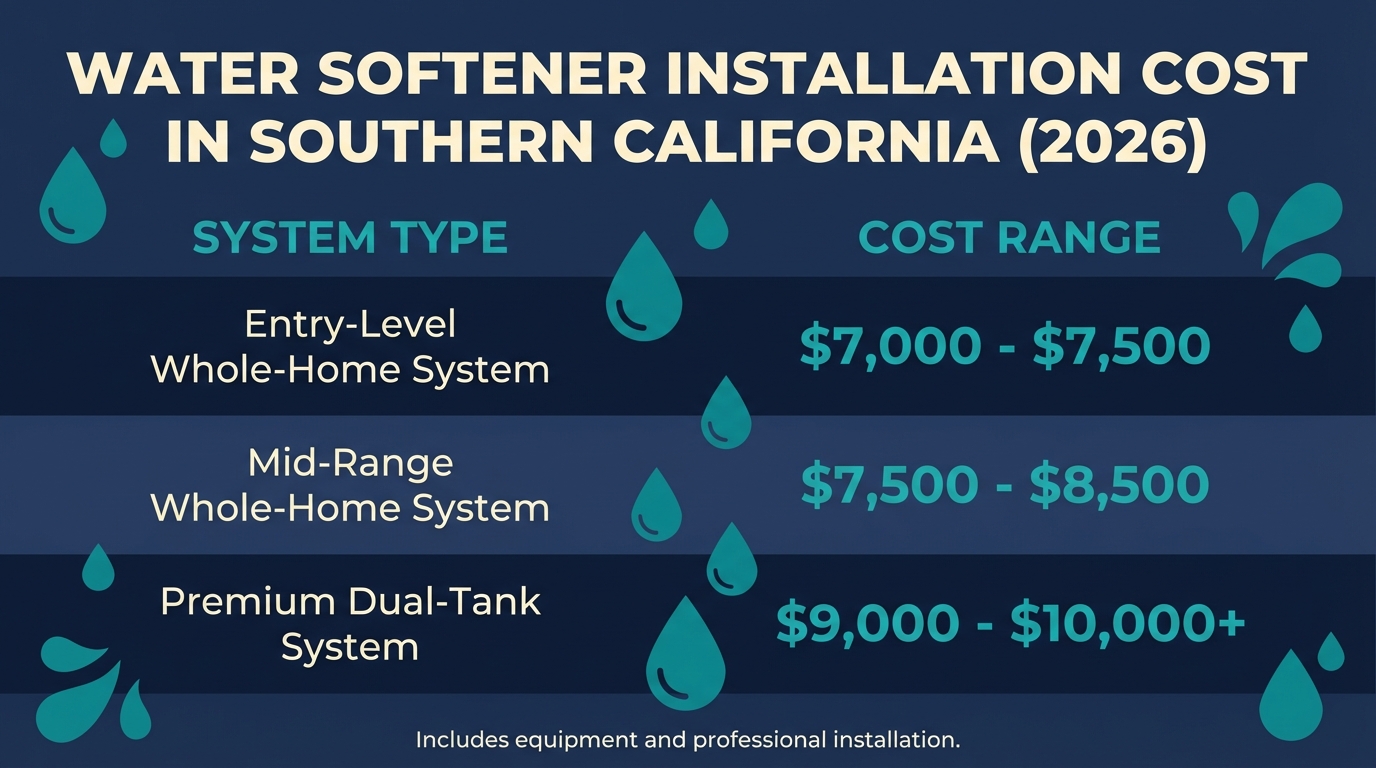
These figures include equipment and professional installation. DIY kits are available online for less, but improper installation can void warranties and lead to costly water damage — most SoCal homeowners opt for professional service.
Water softeners are rated by grain capacity — the amount of hardness minerals they can remove before regenerating. A 2-bedroom condo in Long Beach needs a very different system than a 5-bedroom home in Temecula. Larger systems cost more upfront but serve more water per cycle.
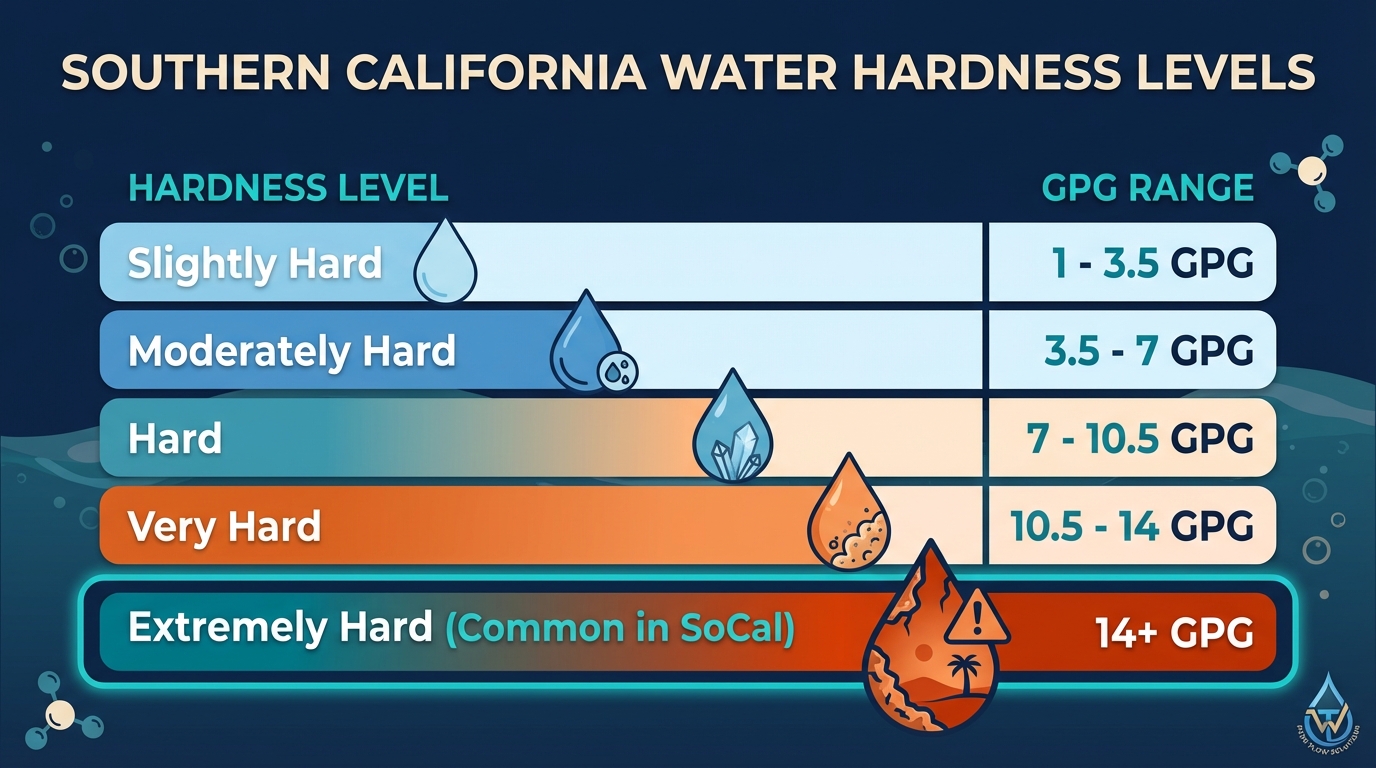
Water hardness is measured in grains per gallon (GPG). Southern California's water is notoriously hard — some areas clock in at 20–30+ GPG, which is considered "very hard" by industry standards. The harder your water, the higher-capacity (and higher-priced) system you'll need.
Traditional salt-based softeners are typically the most effective for very hard water and fall in the middle of the price range. Salt-free conditioners (also called descalers) cost slightly more to install but eliminate the need for ongoing salt purchases.
Single-tank systems are the standard choice for most households. Dual-tank systems are ideal for larger homes with high water demand — they regenerate without any downtime, so you always have softened water available. They carry a premium price but offer maximum performance.
Many Southern California homeowners choose to pair their softener with a whole-house filtration system and/or under-sink drinking water filters. Bundled packages offer better value than buying systems separately and address both hardness and contaminant concerns in one installation.
This is one of the most common questions we hear, especially as California continues to tighten water softener regulations in certain municipalities.
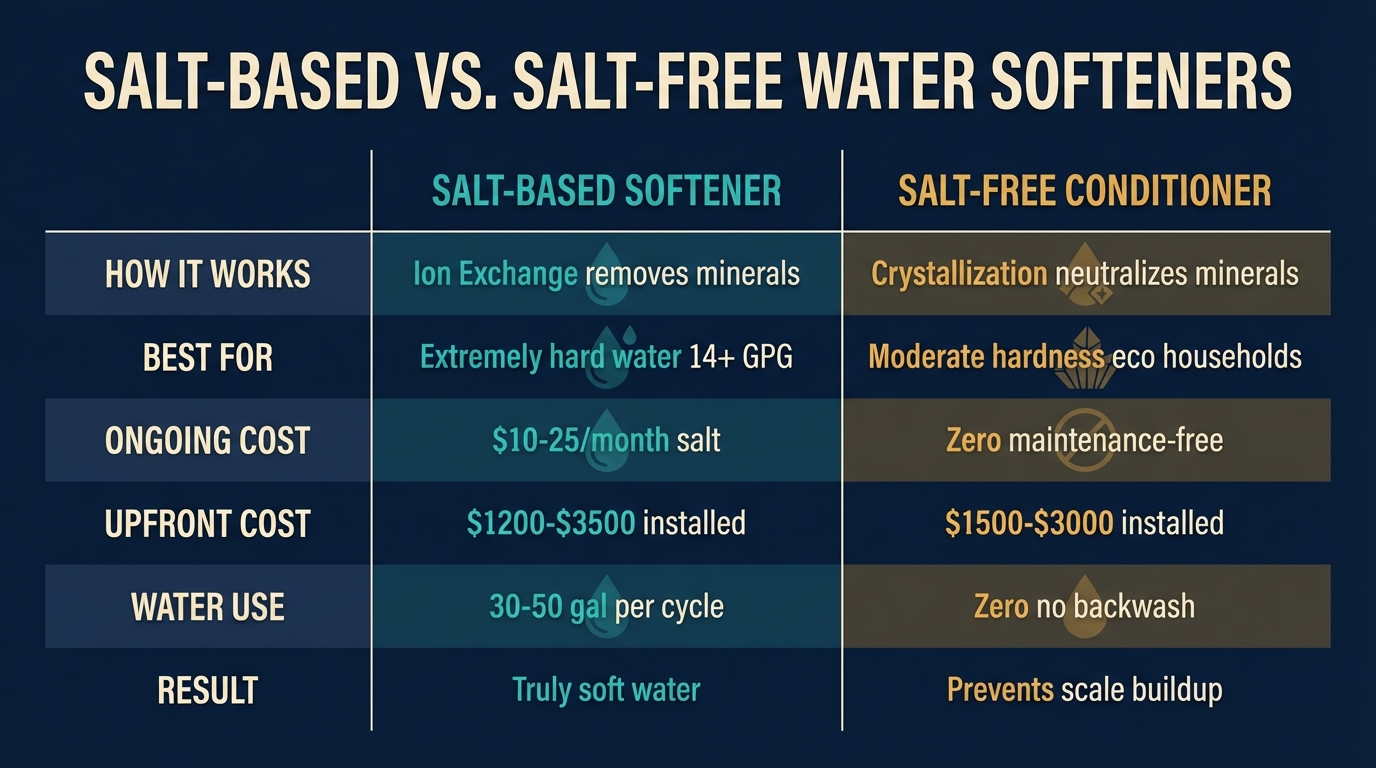
Note: Some Southern California cities (including parts of LA County) restrict or ban salt-based softeners due to wastewater salinity concerns. A licensed installer will know what's permitted in your area.
For most Southern California homeowners dealing with extreme hardness, a salt-based system tends to deliver the most noticeable results. For households in cities with salt restrictions, or those looking for a low-maintenance option, a salt-free conditioner is an excellent alternative.
Installation is a one-time expense, but owning a water softener does come with modest ongoing costs to factor in:
When you compare this against the cost of bottled water delivery ($50–$100+/month for many SoCal households) or the damage hard water causes to appliances and pipes over time, a home water treatment system almost always pays for itself.
Sticker shock is real, but it doesn't have to stop you. Many reputable water treatment companies in Southern California offer financing that makes installation accessible at any budget.
Select Source Water offers $0 down financing with monthly payments starting at $75/month — making whole-home water treatment available to any SoCal household, without a large upfront investment.
When evaluating financing options, look for:
At roughly $75/month, a financed water softener costs less than most Southern Californians spend on bottled water and cleaning products to deal with hard water damage — making it a financially sensible decision from day one.
The short answer: yes — especially in SoCal. Here's why the math works in your favor:
For most homeowners in Los Angeles, Orange County, San Diego, Riverside, or the Inland Empire, a quality whole-home water treatment system is one of the highest-return investments you can make in your property.
The best way to get a precise cost estimate is with a free in-home water test. A licensed water treatment specialist will:
Select Source Water offers free in-home water quality tests across Southern California — no commitment required. Most appointments take 45–60 minutes and include a full water quality report.
Same-day and next-day installation is available in most SoCal service areas, and most installations are completed within a single day.
A quality salt-based water softener typically lasts 15–20 years with proper maintenance. Salt-free systems can last even longer with minimal upkeep. Look for systems backed by a lifetime warranty on the tank.
DIY installation kits are available, but professional installation is strongly recommended for most homeowners. Improper installation can void your warranty, cause leaks, and create backflow issues — especially in older SoCal homes with mixed plumbing materials.
Standard water softeners remove hardness minerals (calcium and magnesium) but are not designed to filter contaminants like chlorine, heavy metals, or VOCs. A whole-house filtration system paired with a softener addresses both concerns.
Some municipalities in the greater LA area have restrictions on salt-based softeners due to brine discharge into wastewater systems. However, salt-free alternatives are permitted everywhere. Your installer should confirm local regulations before installation.
Grain capacity refers to how much hardness a system can remove before regenerating. A 96,000-grain system handles most 1–3 bedroom homes, while a 196,000-grain dual-tank system is better suited for large households, high water demand, or extremely hard water — common throughout the Inland Empire and Riverside County.
They solve different problems. A softener addresses hardness; a filter addresses taste, odor, and contaminants. Many SoCal homeowners opt for a combined system — particularly those looking to eliminate bottled water or concerned about chlorine and chloramines in municipal water.
Select Source Water offers free in-home water quality tests across Southern California — including Los Angeles, Orange County, San Diego, Riverside, and the Inland Empire. Our licensed specialists will test your water, walk you through your options, and provide a no-pressure quote with flexible financing starting at $0 down.
Call or book your free water test online today. Most homeowners are surprised by what's in their water — and how affordable the solution really is.

